Sunday, February 20, 2022

Parkinson's could be otherwise (2): towards cure.


Officially, Parkinson's is still incurable in Western medicine.

Cases of possible cure or reversal of symptoms occur in very strong or highly motivated people (Robert Rodgers has collected numerous cases since 2004. His mother had Parkinson's). And in Hindu and Chinese medicine, it is considered a difficult disease to treat, but not incurable.

The same is said about Alzheimer's or Multiple Sclerosis, but there are doctors/neurologists who have called it into question: Seignalet, Bradesen, Newport, Swank, Wahls...

Many neurologists speak of a syndrome and some propose different therapies (Coimbra, Costantini, Birkmayer, Perlmutter). The cause would be multiple (and maybe impossible to know exactly). It must therefore be treated as something that is multifactorial, due to multiple deficiencies (Hinz speaks of 29)...

The Hindus and the Chinese created multi-modal and multi-phase treatments centuries ago. Their products and therapies (massages, acupuncture, movements) treat all possible routes of damage (detoxification, antioxidants, anti-inflammatory, liver protection, good nutrition, etc.).

The cause may persist (high stress sensitivity to stress, genetic aspects, etc.) or not (high stress stage already overcome, poor nutrition, etc.). Outside of current Western medicine, there are no incurable diseases. Difficult to treat/cure, yes, but not impossible. But we already know many antidotes: anti-stress magnesium, epigenetic measures, Mediterranean diet and phytotherapy, etc.

One can follow the orthodox Western path, the Eastern ones, a mixture of both (there are very interesting studies on madopar together with Chinese formulas), or the external ways of highly motivated patients (Freeman, Pepper, Coleman, Shifke). Whatever the choice, and with the supervision of a specialist, I would continue with a new lifestyle: Mediterranean diet or similar, green tea (with ginger and turmeric with a little black peppercorns), lion's mane mushroom, a daily salad, vitamin D3 supplement (together with magnesium and brewer's yeast), omega 3 fish pearls, physical exercise, acupuncture, etc.

AYURVEDA.

See planetayurveda.com. Parkinson's Formulas.

https://www.planetayurveda.com/library/parkinsonism/

- Observational clinical study with Ayurvedic medicine (Pathel 2018):

Pathel mentions cases who, after several months of treatment in two phases (purifying and symptomatic), moved from stage 3 to stage 1 on the Hoehn and Yahr scale. Measurements with the UPDRS scale were also significant. 16 patients reduced their symptoms from stage 3 to 1.5. Another 10 patients went from stage 3 to 1.

TRADITIONAL CHINESE MEDICINE.

And this other amazing one for TCM:

http://www.itmonline.org/arts/parkinsons.htm

Some formulas backed by studies, either claiming healing results/significant improvements or anti-parkinson effects of their components: oxidation, inflammation, glutamate, parkinsonizing toxins, etc.

Zichan powder,

Yigansan formula,

Xifengzhizhan pills and capsules,

Zeng-xiao An-shen Zhi-chan 2 or ZAZ2,

Zishenpingchan granules (Ye 2021).

Liuwei dihuang or Liu Wei Di Huang Wan (Tseng 2014, Rehmannia Six Formula).

- 10 cases treated with Chinese medicine:

10 patients reportedly cured of idiopathic Parkinson's in not very advanced stages with use of Chinese herbal formula

Wang Weifang, published in the Journal of Brain and Neurology ten cases of possible (and controversial) cures over the last three decades, using Xifengzhizhan pills and Xifenzhizhan capsules.

These results were presented at the 7th International Conference on Brain Disorders and Therapeutics 2020, which took place in Prague, Czech Republic.

The main components of Xifengzhichan Pills are: Shudi, cornel meat, medlar, chrysanthemum, Ligustrum lucidum, Gastrodia elata, uncaria, polygonatum, asparagus, etc. The main components of Xifengzhizhan capsules are: white peony root, ejiao, turtle shell, cistanche deserticola, natural ground, radix scrophulariae, radix bidentata, etc.

Xifengzhichan Pills, 9 grams each time, three times a day; Xifengzhichan Capsules, 6 capsules each time, three times a day. Oral administration.

In other studies, it is referred to as "Xifeng Dingchan Pill" (XFDCP). For example, in:

Zhang (2013). Evaluation on the efficacy and safety of Chinese herbal medication Xifeng Dingchan Pill in treating Parkinson's disease: study protocol of a multicenter, open-label, randomized active-controlled trial.

Testing its efficacy alone and with Madopar.

---

The guidance of a doctor and, if possible, a doctor trained in both Western and Oriental medicine is always recommended.

Monday, January 10, 2022

Parkinson's could be otherwise.


Did you know that...?


SELF-HEALING

...numerous people claim to have controlled, healed or reversed the symptoms of their disease (Annetta Freeman, Howard Shifke, John Coleman, Colin Potter, John Pepper...). Robert Rodgers' project since 2004, with his blogs, books and almost 300 radio programmes on Parkinson's and numerous mentions of recovery cases is worthy of being highlighted as unique worldwide.

CASES OF POSSIBLE CURE

...in 2008, the media reported that Australian John Gillies had been cured of four years of Parkinson's disease by antibiotic treatment for severe constipation due to "Clostridium difficile" recommended by the well-known gastroenterologist Thomas Borody. Two neurologists would have confirmed the absence of symptoms (in this case one could argue a possible diagnostic error); but in the following case, there is no such possibility. The patient had been diagnosed as usual, responded well to Sinemet (levodopa/carbidopa) and a SPECT DaT test confirmed the diagnosis. Neuroscientist Karishma Smart and colleagues published in 2016. A 78-year-old man, with 16 years of diagnosed disease, reportedly experienced remission of his Parkinson's disease. The practice of daily deep prayer/meditation would be the most characteristic and possible cause. Pagnoni in 2007 reported that regular meditation can counteract damage to the striatum and dopaminergic depletion. And in a similar vein Pickut in 2013 and Newberg in 2010.

SIGNIFICANT IMPROVEMENT

...some neurologists claim in their studies and writings to have significantly improved the lives of patients: the neurologist and professor of Neurology at the University of Sao Paulo, Brazil, Cicero Coimbra in 2002, achieved with high doses of riboflavin (vitamin B2) an improvement of up to 71 % (three patients, up to 100 %); the neurologist Antonio Costantini in 2013, with high doses of thiamine (vitamin B1), an improvement of up to 77 %; the neuroscientist Oliver T. Phillipson, with a healthy person, an improvement of up to 35 % (Albertsky, 2013); the physical exercise in tandem on an exercise bike, with a healthy person, an improvement of up to 35 % (Albertsky, 2013). Phillipson, symptom control and halting progression of a patient in 2013; tandem exercise on a stationary bike with a healthy person, 35 % improvement (Alberts 2011); ketogenic diet for one month, 43 % improvement (VanItallie 2005); etc.

LESS RISK

... Parkinson's disease can be prevented or the risk of developing Parkinson's disease can be reduced: by 87 % with coffee, tobacco and non-steroidal anti-inflammatory drugs, NSAIDs (Powers 1988); the highest level of vitamin D reduces the risk by almost 70 % compared to those with the lowest level (Knekt 2010); of vitamin B6 by up to 51 % (Lau 2006); of folic acid or vitamin B9 by 49 % (Religa 2006); of riboflavin or B2 by 51 % (McCormick 1988); regular consumption of certain foods rich in vitamin E by up to 76 % (Golbe 1988), etc.

DELAYING THE DISEASE

...the onset of the disease can be delayed: 17.4 years in women and 8.4 years in men with a Mediterranean type of diet (Metcalfe-Roach 2021); regular coffee consumption, up to 8 years (Benedetti 2000); green tea, up to 7.7 years (Kandinov 2009); etc.


SLOWING DOWN THE PROGRESSION

...can even slow or halt its progression: 1200 IU of vitamin D3 daily slowed it down for one year (Suzuki 2013); intense physical exercise, especially forced exercise (Ahlskog 2011, 2018; Schenkman 2018); etc.


SEVERITY OF SYMPTOMS

...the severity of Parkinson's symptoms is related to deficiencies of certain substances, as well as vitamins and phytonutrients: cholesterol (Huang 2011, 2019); magnesium (Barbiroli 1999); vitamin D (Liu 2014), etc.

CURE OF CERTAIN PARKINSONISMS

...with vitamins such as vitamin C (Nobile 2013, Quiroga 2014) or B12 (Priolisi 1959, Soysal 2018) some types of Parkinsonism have been cured; etc.

Immunotherapy to treat melanoma, although the symptoms returned after the end of therapy (Shprecher 2014).

Vascular Parkinsonism (Lobo 2013).


(It has taken me almost 30 years to learn this information. This should never happen again. Important information should be available to patients and their families in a few books and brochures in all languages.)

Friday, May 14, 2021

Three books or treasures by neurologist Gonzalez Maldonado.


THREE BOOKS BY A PRESTIGIOUS NEUROLOGIST: THREE TREASURES ON THIS PATH TO THE HEART OF THE LABYRINTH.

FIRST.

"The books of Dr. González Maldonado (1): "The strange case of Dr. Parkinson".


To explain here what the first two books (published in 1997 and 2004) of the neurologist from Granada, Dr. Rafael González Maldonado, meant to us is both an easy and difficult task.
Easy because it is so much that it is only necessary to narrate it and the quality of his books speaks for itself.
Difficult because his influence reached practically every aspect of our lives.
I price myself for having initiated a friendship with him through social networks and the Internet and it does not affect my judgment in the least (as this comes from the late 90's). Far from flattery or awkward praise, my opinions on the importance of his books are old and previously published. On the other hand, my opinion about his way of being a doctor and, therefore, of treating the sick, is confirmed every time I meet a sick person who has been treated by him or I recommend him to someone and when they come back they tell me how it went.
"The Extraordinary Case of Dr. Parkinson" (1997, republished in 2013), was for my father a real bedside book. It came into his hands around 1999 or 2000, perhaps recommended by an acquaintance.
I have already written about it on Facebook and on my blog, both entitled "Parkinson's here and now". Eventually we bought a second copy for me and we would read passages to each other, trying to really understand what we were reading (i.e., the nearly impossible task of integrating that into a framework of scientific knowledge we didn't have).

Not only is it one of the best books ever written about Parkinson's, in any language and in any era, but it has certain interesting qualities: it is well written; it is valid for patients, families and caregivers, as well as for doctors; and the most remarkable, in my opinion, is that it is a classic in the sense that it is alive, it has pores, it accompanies the reader throughout his life experience with the disease, providing him with knowledge as he is able to understand more things because of the accumulated information and experience. The book changes as the reader evolves over the years.

It also has a great sentimental value for me because my father's copy is full of underlines, notes with different types of letters (reflecting the phase of the illness in which he made them, the emotional state) and they have served me to "date" in time, in an approximate way, his interests and concerns. Even the one that is illegible due to the parkinsonian micrography (very small letters) (it seems that the lines get tired and fall down).


I think it is important to repeat it: one of the most surprising things, seen from today, is how little we understood of this book in the early years, despite how clearly it explains the essentials. It took us a long time to leave behind our ignorance that was anchored in our prejudices that were proof of reasons to the contrary.

As a sample of the union of the scientific and the practical, an excerpt from his book:

"LEMON JUICE.
It is not a quack prescription. Levodopa absorption changes according to gastrointestinal pH. Taking lemon juice (30 ml) with each dose of levodopa increased its plasma levels and improved motor function in a group of Parkinsonians (38), especially those in whom the initial gastric acidity was lower than normal. 254.

Yazawa I, Terao Y, Sai I, Hashimoto K, Sakuta M. [Gastric acid secretion and absorption of levodopa in patients with Parkinson's disease--the effect of supplement therapy to gastric acid]. Rinsho Shinkeigaku 1994; 34:264-266."


Note of 12/03/2021: English translation available.

---


SECOND.

"Dr. Gonzalez Maldonado's books (2): Heterodox treatments in Parkinson's disease.


The second book that we knew of the neurologist Dr. Rafael González Maldonado was "Heterodox treatments in Parkinson's disease" (2004), which came to us when we had already started our search for the paths of complementary and alternative treatments. But before this book there were only hesitations motivated by press and TV news (vitamin B2 and elimination of red meat, fermented papaya, etc.).

If the first one was "my father's" book, this one was "mine".

It is an essential work. A brief "encyclopedia" that offers a deep, rigorous and as simple as it can be, vision of a very important part of the universe of unofficial treatments related to Parkinson's (and valid for all other neurodegenerative diseases), with the author's favorable or unfavorable opinion on each one. The footnotes, together with more than 1400 references to scientific studies listed in an appendix at the end, make it 190 pages long.
Nearly 20 years of experience with my father's disease (1994-2012) make it a unique book, not only in Spanish but in any language.
It modeled, stimulated, corrected and influenced our concerns, our searches.
Thanks to "Tratamientos heterodoxos" we were able to start trying many things and we dared to publish in forums.
The sections on vitamins, minerals and trace elements, omega 3 fats, green tea, medicinal plants such as passionflower and valerian, tobacco, chocolate or coffee, were some of the ones we read the most in our two copies of the book.

For example:

"13. PASSIONFLOWER
Passionflower, passion flower or passion fruit is a climbing plant with large red flowers (Passiflora incarnata). Its active ingredient, passionflower, is structurally similar to morphine, but is not addictive. It is a popular remedy for insomnia and nervousness and relieves coughs.
Currently, passionflower is considered a reliable anxiolytic and sedative, as effective as oxazepam and with less functional impairment, so it is useful in Parkinsonians whose gait worsens with benzodiazepines.
In Parkinson's it has other advantages: it potentiates levodopa, reduces resting tremor, relieves night cramps and improves sleep".


This beautiful anecdote told by the famous psychologist Carl Gustav Jung serves me to express what these books meant to us:

"I always remember that one morning I received a really poor piece of writing on a sheet of paper, from a woman who wanted to see me at least once in her life. The letter impressed me greatly, but I wasn't sure what the reason for it was. I invited her to visit me and she came. She was very humble, also intellectually.
I don't think she had completed her elementary studies.
She took care of her brother's house and also ran a small newspaper kiosk.
I cordially asked her and she answered me this way:
"Your books, they are not books, Herr Professor, they are bread..."


Your books, they are not books, doctor, they were and are bread..."


Note dated 12/03/2021:
And they still are. Perhaps even more so than then.

We are still without an English translation in 2021. As strange as it is that elevated homocysteine is still not routinely treated with appropriate doses and forms of vitamins B6, B9 and B12 (especially since levodopa raises the neurotoxic homocysteine).

---

THIRD.

"Dr. Gonzalez Maldonado's books (3): Parkinson's disease and stress.


I have already mentioned "El extraño caso del Dr. Parkinson" (1997) and "Tratamientos heterodoxos en la enfermedad de Parkinson" (2004). These two were important in my father's lifetime and, later, in writing this book.
The third one I have read, "Parkinson y estrés", is a treasure to me.

Firstly, because it sets out many interesting and enriching ideas about Parkinson's, which show that its author is at the forefront of what is beginning to be known and intuited about the enormous mysteries of this elusive disease.

Moreover, on a personal level, its author was kind enough to mention and cite my blog "Parkinson's here and now" in his book, specifically by a reference to Dr. Hurni's thesis. This gesture of kindness does not influence in the least my judgment on his books, since my admiration for his works is earlier (as can be seen in the blog).

He seems to me a worthy continuation of the first two books, "The Strange Case..." and "Heterodox Treatments...", focusing on the psychic aspects of Parkinson's, in particular, on the importance of stress in the origin and development of the disease. This idea was put forward by the pioneers of Neurology in the 19th century, but almost abandoned during most of the 20th century by other scientific currents and fashions.
In my opinion, it has brilliant moments of great interest for the non-specialist reader: the exposition of the hypothesis of dopaminergic forging, the possible evolutionary weakness of the substantia nigra, the existence of "Parkinson's diseases", the story about Mark Peter Hurni, the influence of stress on the brain, etc.

Worth an example:

"In the 19th century, but also much earlier, the classics intuited (intuition is a shortcut to knowledge) that stress, intense emotions and suffering in general accelerated the aging process, including the precocious appearance of gray hair. This is part of the popular cultural heritage. It is a constant in our classics from ancient Greek philosophers to recent novelists."

What he says places the three books mentioned above among the most interesting works of popularization of these two centuries of modern Parkinson's History.
These three books by Dr. Gonzalez Maldonado were for years "bread" for my father and me, not just books.".

---

Note 12/03/2021: And they still are. Frequent place to return to review, learn and seek inspiration. And of many memories...

Monday, March 22, 2021

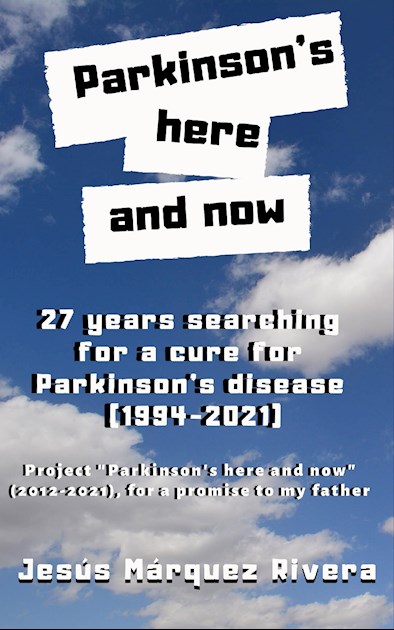
Link to download 326-page book: "Parkinsons here and now. 27 years...".


"Parkinson's here and now.
27 years searching for a cure
for Parkinson's disease (1994-2021)."


 FREE EBOOK OF 326 PAGES.


LINK TO GOOGLE DRIVE


A free ebook of about 250-300 pages and in printable pdf format, which collects the most interesting of the book I published in 2015 (now translated into English) as a tribute to my father and the most read and commented of what has been published in blogs, forums and social networks in recent years.

I think the book offers a coherent vision and with sufficient backing in scientific studies on the fact that we could already decisively improve the lives of the sick and family members. WE ALREADY KNOW ENOUGH FOR THAT. Mainly from those who are beginning this hard road, but also from those who have already been on medication and iatrogenic for many years.


I have learned and am learning so much in this forum that I wanted to advance you all a passage as a thank you and also to give it publicity and facilitate its dissemination. I sincerely believe it may help many people to see it all differently, but concentrated in a few hundred pages. And thus fulfill in part the promise I made to my father:


"My son, write about all this. May no one else have to go through what I went through. I did not understand anything and I realized it too late. Make that what we have lived and learned in these years has not been useless... that it will not be lost. Promise me that you will not leave them alone" (January-February 2012).


Thursday, March 18, 2021

Free 300-page ebook coming soon: "Parkinson's here and now. 27 years searching for a cure for Parkinson's disease (1994-2021)."


This coming Monday (if everything goes as planned) I will publish on my blog "Parkinson's here and now" the link to a free book of about 250-300 pages and in printable pdf format, which collects the most interesting of the book I published in 2015 (now translated into English) as a tribute to my father and the most read and commented of what has been published in blogs, forums and social networks in recent years.
I think the book offers a coherent vision and with sufficient backing in scientific studies on the fact that we could already decisively improve the lives of the sick and family members. WE ALREADY KNOW ENOUGH FOR THAT. Mainly from those who are beginning this hard road, but also from those who have already been on medication and iatrogenic for many years.

I have learned and I am learning so much in forums, books and studies that I wanted to advance you all a passage as a thank you and also to give it publicity and facilitate its dissemination. I sincerely believe it may help many people to see it all differently, but concentrated in a few hundred pages. And thus fulfill in part the promise I made to my father:

"My son, write about all this. May no one else have to go through what I went through. I did not understand anything and I realized it too late. Make that what we have lived and learned in these years has not been useless... that it will not be lost. Promise me that you will not leave them alone" (January-February 2012).


"Parkinson's here and now. 27 years searching for a cure for Parkinson's disease (1994-2021).", pages 13-20.


NEWS THAT WORRY US AND STUDIES THAT GIVE US HOPE.

Note: Although this is not a scientific book, it includes brief references to studies that helped my father and me to advance in the understanding and care of his disease and also in the preparation of this project. We interpret them according to the state of our knowledge and experience at the time and with all our limitations, but I believe they can shed light on our evolution from fear to hope.


News that worry us.

In the coming decades the number of Parkinson's disease sufferers is feared to increase very worryingly, to double by 2030 (Dorsey 2007) and even to triple by 2050. We already know that between 1990 and 2015 the number of sick people worldwide has doubled (Dorsey 2018). And more and more young people and at younger ages (which would speak of a hostile environment: diet impoverished in key nutrients, environmental toxins, etc.). Worldwide, but especially in industrialized countries. They say that the main cause would be the aging of the population. Neither my father nor I were ever too satisfied with that explanation.

Every hour a case of Parkinson's disease is diagnosed in Spain. Every nine minutes, a new case in Europe and another in the United States.

Age is considered a risk factor. But the areas of the brain where neurons are lost show differences between the aging normal brain and the brain with Parkinson's disease: in the former, mainly in the dorsal regions of the substantia nigra and, in the case of Parkinson's, the loss in the latter occurs, in particular, in the ventral regions of the substantia nigra (Gibb 1994).
 
In addition, when the brain of a person with Parkinson's disease is autopsied, Lewy bodies usually appear in the substantia nigra. But they are also often found in the brains of people without Parkinson's disease. Therefore, it has been suggested that people with Parkinson's experience an accelerated aging process (Adams 1997). As the famous Dr. William Osler believed, a century earlier.

But I think it is in the same way that living in the countryside and drinking well water increase the risk of Parkinson's disease. The use of pesticides and other chemicals could be the cause (Barbeau 1987). I think it is not age, but lifestyle. Just as it is not the field or the well water, but the pesticides and other chemicals it contains.


Studies that give us hope.

"The father of the disease could have been anyone,
but there is no doubt that the mother was bad diet."

Ancient Chinese proverb


What struck us most was that simply drinking coffee regularly (about two cups a day) had such surprising neuroprotective effects against Parkinson's disease:

- a lower risk of suffering from it, between 20 and 70 % .
- in case of developing it, it will appear on average 8 years later, from 64 to 72.
- not consuming coffee increases the risk five times.

Caffeine for many reasons, in addition to its resemblance to iron chelators, for its vasoconstrictor capacity of the blood-brain barrier. Perhaps by forming a cocktail with other substances such as nicotinic acid, ferulic acid, phytomelatonin...

(Benedetti 2000, Sobel 2000, Hu 2007, Saaksjarvi 2008).

Studies with identical twins gave us a lot of hope, since despite sharing the same genes, one can have the disease and the other cannot. It is known that lifestyle (epigenetics), influences whether genes will be "expressed" or "silenced". These studies on smoking (Tanner 2002) and on the consumption of antioxidant vitamins (Maher 2002) also revealed that both can prevent or delay the development of the disease (in the twin who smoked or in the twin who took vitamin supplements - up to 3.2 years). This is confirmed by the finding that vitamin B12 epigenetically regulates -silences- the major gene for so-called familial or hereditary Parkinson's: the LRRK2 (Schaffner 2019).

The regions of the planet where green tea is consumed have half the cases of Parkinson's disease (Pan 2003). If the disease is present, it delays its onset by 7.7 years (Kandinov 2009). The main polyphenol it contains, epigallocatechin gallate (EGCG), prevents the death of neurons, rescues the damaged ones and neutralizes the alteration of the alpha-synuclein protein (Mandel 2004, 2008, 2011, 2012, Levites 2003), among many other beneficial properties, being considered as effective in the prevention and treatment of the disease (Li 2006; Ramassamy 2006; Guo 2007; Avramovich-Tirosh 2007; Zhao 2009).

Vitamin D3 (cholecalciferol) is able to prevent Parkinson's disease by 67% in certain patients (Knekt 2010). It even seems to have the property of slowing down the progression of the disease, with doses of 1200 IU daily for one year (Suzuki 2013). Several neurologists recommend or use between 5,000 and 10,000 IU: Perlmutter 2013, Coimbra, Hiller 2018, Fullard and Duda 2020... During 30 minutes of sunbathing on the beach, the body synthesises approximately 10,000-25,000 IU (Fullard 2020). It also regulates the expression of the gene controlling the neurotrophic factor GDNF (Naveilhan 1996, Verity 1999, Luong 2012). Administration of this factor could be one of the most promising treatments in Neurology today (Gill 2003, 2005, Slevin 2005, Patel and Gill 2007, 2013). After patent problems, Dr. Steven S. Gill has resumed research in 2013.

Intense physical exercise on an exercise bike (especially forced exercise performed in tandem with a healthy person) provides an improvement in motor symptoms of around 35-40 %, similar to a dose of levodopa (Alberts 2011). Physical exercise also promotes neuroplasticity and neurogenesis (Mattson 2000). It can even delay the onset of symptoms (Tsai 2002) and, slow down and stop the progression of the disease (Oguh 2014). In short, it improves virtually everything: motor (Prodoehl 2015, David 2016, Chung 2016, Bhalsing 2018) and non-motor symptoms (David 2015, Reynolds 2016).

In a study conducted in Japan, depending on the level of magnesium that the mice had in their blood it was possible or not to produce experimental parkinsonism with the known toxic MPTP. For those with a high level, it was impossible to cause the disease (Oyanagi 2010). Magnesium is known to be neuroprotective (Vink 2009, Durlach 1997, Wallach 1994, Held 2002) and also protects against heavy metal and aluminum damage (Yasui 1992). It also participates in the synthesis of dopamine and glutathione. It also inhibits the aggregation of spontaneous alpha-synuclein and that produced by iron (Golts 2002).

Magnesium concentration in Parkinson's patients is low. A link has been observed between the magnesium level and the duration and severity of the disease (Barbiroli 1999). There is even talk of "magnesoma" (Piovesan 2012), because of its importance on proteins and epigenetics (the study of what causes genes to be expressed or silenced, in simplified terms).

An elevated level of the amino acid homocysteine in the blood is neurotoxic and has been identified as a risk factor for developing the disease. A level above 20 micromoles/L, increases the risk of developing Parkinson's up to 8.64 times (Saadat 2018). Parkinson's patients have high homocysteine and those taking levodopa even more so (Mattson 2003, Obeid 2007). Some authors claim that an elevated level is largely responsible for the current progression of the disease (Yasui 2000, Muller 2001). It also damages the blood-brain barrier, which is responsible for protecting the brain (Beard 2011, Kanath 2006, Tyagi 2008). With a supplementation of vitamin B9 or folic acid (alone or with vitamins B6 and B12) it has been shown to reduce the level of homocysteine (Postuma 2002, Reutens 2002) and the damage to the aforementioned protective barrier (Kalani 2014).

Glutathione is one of the most potent antioxidants and, in its intravenous (IV) form, the one with the most spectacular result I have ever seen in some Parkinson's patients. Neurologist David Perlmutter is perhaps the best known of the physicians applying this therapy. The videos available on the Internet are invaluable in bringing hope to patients and their families. A study in which Dr. Perlmutter participated in 2009 yields less spectacular results on intravenous glutathione therapy (Hauser 2009).

In 1982 a study appeared entitled "Parkinson's disease: a disorder due to glutathione deficiency in the substantia nigra?" (Perry 1982). It seems that Parkinson's patients have very low levels of glutathione in the brain (Arakawa 2007) and that it would be related to the severity of symptoms (Sechi 1996). Sian (1994) found only 40% glutathione in the substantia nigra of Parkinson's patients. In advanced stages of the disease, the level of reduced (active) glutathione could be as low as 2% of normal (Adams 1991).

Hardly anyone questions the importance of glutathione in Parkinson's disease. The debate arises as to how to administer it effectively to raise the concentration in neurons to normal levels.

By administering sustained-release vitamins B6, B9 and B12, it would be possible for glutathione and vitamin B6 to be administered without interfering with levodopa (Lewis 2002). There are researchers who propose precursors such as N-acetyl-cysteine or NAC (Schapira 1990, Martinez 1999, Shahripour 2014, Monti 2019), which cross the blood-brain barrier more easily or substances that restore the glutathione level inside cells (alpha lipoic acid, silymarin from milk thistle, melatonin, turmeric, vitamin C). The neuroprotective ability of the drug selegiline is due to the fact that it somewhat elevates glutathione (Tanaka 2002).

During the 18 years of my father's illness and the first two years of preparing this project (i.e., I needed 20 years!), I did not realize the extraordinary value, the indispensable role, of vitamin C in everything related to Parkinson's: synthesis of dopamine (Seitz 1998) and carnitine (Jacob 1997), "recycling" to its useful forms of vitamin E (Halpner 1998), glutathione (Henning 1991) and flavonoids (Jacob 1997), synthesis of serotonin and melatonin, norepinephrine and epinephrine....

In addition, a diet rich in vitamin C reduces the risk of Parkinson's, while one poor in the vitamin increases it (Cerhan 1994, Singh 1995, De Rijk 1997). It is recommended in the early (Seitz 1998) and late stages (Linazasoro 1995). In addition numerous researchers indicate that it protects neurons from residual levodopa-dopamine damage (Riederer 1989, Pardo 1993, Berg 2001...) In the article "Vitamin C and Parkinson's, essential to prevent and treat this disease?", published in my personal blog, you can expand on this truly "transformative" information: without sufficient vitamin C there cannot be enough dopa  and dopamine.

In recent years we have received three treasures that have revolutionized or should forever revolutionize the Parkinsonian "triad": disease, treatments and the world around the patient (labyrinth, jungle):

1) Vitamin B1 (thiamine hydrochloride): About 4 grams per day on average, divided into two oral intakes, with similar efficacy to intramuscular, easier and safer (Smithline 2012). Results of the Costantini 2013 neurological study: 31-77% motor and non-motor improvement (UPDRS scale). Or 100 mg intramuscularly, twice a week (Smithline 2012, Luong and Nguyen 2013, Costantini and Fancellu 2013, 2015).

2) Vitamin B2 (riboflavin): 90 mg daily, divided into three doses (30-30-30). Despite some "flaws" in the study, motor improvements of 44-71% between 3 and 6 months. Three of the participants, 100 % improvement - Hoehn & Yahr scale - (COIMBRA 2003, MARASHLY 2017). 200 and 400 mg were used to treat migraines in children and adults with success and without adverse effects (SCHOENEN 1994, 1998, 1999).

3) Vitamin B12 (cobalamin): as with vitamin B1, high doses of 500-2000 mcg/day orally overcome the body's obstacles (including the lack of intrinsic factor in the stomach: Albadal 2005). B12 modulates the main "hereditary" Parkinson's gene, LRRK2 (Schaffner 2019); inhibits alpha-synuclein (Jia 2019); slows Parkinson's progression, symptoms such as freezing, gait and postural instability are worse with lower B12 and non-motor, cognitive ones - especially depending on homocysteine level (Christine 2018); is related to symptom severity (McCarter 2019) as well as a lower risk of dementia (Christine 2018, McCarter 2020), etc.

And in the same sense there are hundreds, thousands of studies: melatonin, nicotine patches, NADH IV, coenzyme Q10, complete vitamin E (tocopherols and tocotrienols), each and every vitamin of the B group, vitamin C, selenium, zinc, creatine, carnitine, omega 3 EPA and DHA, flavonoids, turmeric and an endless etcetera.

Friday, February 19, 2021

"Checkmate to Parkinson's" (2021).


"Checkmate to Parkinson's" (2021) is the book I am writing right now, after six years of "A different way of looking at Parkinson's" (2015, only in Spanish)) and more than 10,000 hours of research, reading and studying.


If all goes well it will be published in Spanish and English in March on Amazon.

It will include information updated to February 2021 and a guide to foods, recipes and supplements, with the scientific studies on which they are based and the experience of sufferers.


This is the sketch of the cover in both languages.

Monday, February 15, 2021

What now? Four aces to beat Parkinson's…

 WHAT NOW? 

FOUR ACES TO BEAT PARKINSON'S...


There is enough space on a sheet of paper to summarise the revolution that is taking place in the world of Parkinson's, even if the information does not reach 99% of sufferers and their families. A revolution on paper, but not yet in real life.

What some brave and compassionate neurologists advise in books, articles and scientific studies in recent years. Some blogs and forums offer very valuable information about all this... In general, all treatments can be taken with your regular medication. It is up to your doctor to adapt everything to your specific case...

[ATTENTION: YOU SHOULD CONSULT EVERYTHING
WITH YOUR NEUROLOGIST AND YOUR PHARMACIST].


VITAMIN B1 (thiamine hydrochloride): About 4 grams per day on average, divided into two oral intakes, with similar efficacy to intramuscular, easier and safer (SMITHLINE 2012). Results of the Costantini 2013 neurological study: 31-77% motor and non-motor improvement (UPDRS scale). Or 100 mg intramuscularly, twice a week. (SMITHLINE 2012, LUONG AND NGUYEN 2013, COSTANTINI AND FANCELLU 2013, 2015).

VITAMIN B2 (riboflavin): 90 mg daily, divided into three doses (30-30-30). Despite some "flaws" in the study, motor improvements of 44-71% between 3 and 6 months. Three of the participants, 100 % improvement - Hoehn & Yahr scale - (COIMBRA 2003, MARASHLY 2017).
200 and 400 mg were used to treat migraines in children and adults with success and without adverse effects (SCHOENEN 1994, 1998, 1999).

VITAMIN D3 (cholecalciferol): 1200 IU daily for one year. Disease arrest, no worsening according to UPDRS scale (SUZUKI 2013).
Between 5000 and 10,000 IU daily, recommended or used in studies by these neurologists (PERLMUTTER 2013, COIMBRA "PROTOCOL", HILLER 2018, FULLARD AND FULDA 2020). During 30 minutes of sunbathing on the beach, the body synthesises approximately 10,000 IU (FULLARD 2020).

VITAMIN B12 (cobalamin): as with vitamin B1, high doses of 500-2000 mcg/day orally overcome the body's obstacles (including the lack of intrinsic factor in the stomach: ALBADAL 2005). B12 modulates the main "hereditary" Parkinson's gene, LRRK2 (SCHAFFNER 2019); inhibits alpha-synuclein (JIA 2019); slows Parkinson's progression, symptoms such as freezing, gait and postural instability are worse with lower B12 and non-motor, cognitive ones - especially depending on homocysteine level (CHRISTINE 2018); is related to symptom severity (MCCARTER 2019) as well as a lower risk of dementia (CHRISTINE 2018, MCCARTER 2020), etc.

Sources of information: neurologists, scientific studies (Costantini 2013, Coimbra 2003, Fullard and Fulda 2020, Christine 2020...). Pubmed (Medline), HealthUnlocked - Parkinsons Movement, Neurotalk Support Groups - Parkinsons, PIENO in Internet Archive, blog "Parkinson's here and now"...

Jesus Marquez Rivera (Parkinson here and now, 2012-2021).
(contact: jesusmarquezrivera at gmail dot com).

 ---

 Epilogue of my next book that will possibly be published on Amazon in March 2021... I am looking for a publisher, sponsors, donations to be able to dedicate myself 100% to this vocation of searching and disseminating information in a simple and understandable way, with books, articles and videos... There are many more treasures waiting "forgotten" in books, forums and databases...

On the right sidebar of the blog there is a Paypal button next to a book and several free brochures. On mobiles it is not visible, unless you activate "View web version" at the bottom of the blog on the mobile screen.


I have chosen four of the most important ones, but there are so many treasures available: Glutathione or NAC, vitamin C, EGCG from green tea, turmeric, alpha lipoic acid, DHA from omega 3, magnesium, zinc, selenium, the rest of the B vitamins (B3 as niacinamide, B6 and B9), etc.